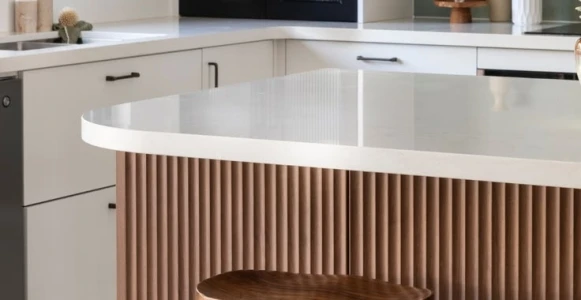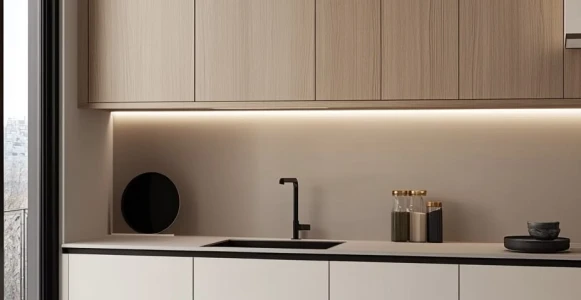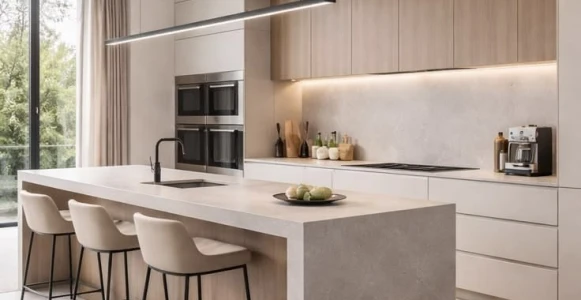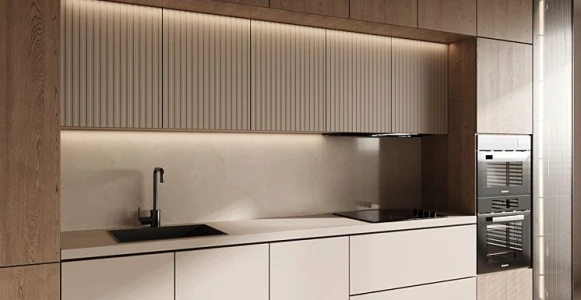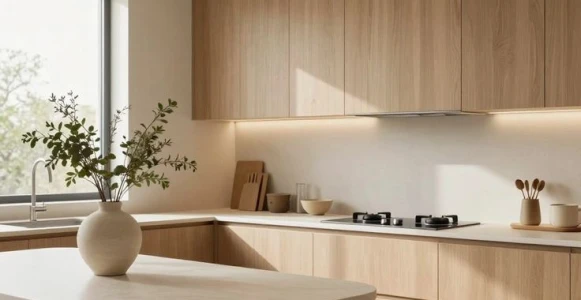
Smart Modular Kitchen, a modern kitchen is no longer just a cooking space; it is a highly calibrated workstation designed to simplify daily routines and enhance culinary efficiency. At the heart of this transformation is the smart modular kitchen—a concept that seamlessly blends ergonomic layout design with cutting-edge cabinet hardware and intelligent storage solutions. Choosing high-quality Kitchen cabinets is the foundational step in this process, providing the physical framework for a space that is both visually striking and structurally resilient. By focusing on customizable components and advanced kitchen cabinet interiors, homeowners can create a bespoke environment that adapts to their specific lifestyle needs, ensuring long-term usability and timeless aesthetic appeal.
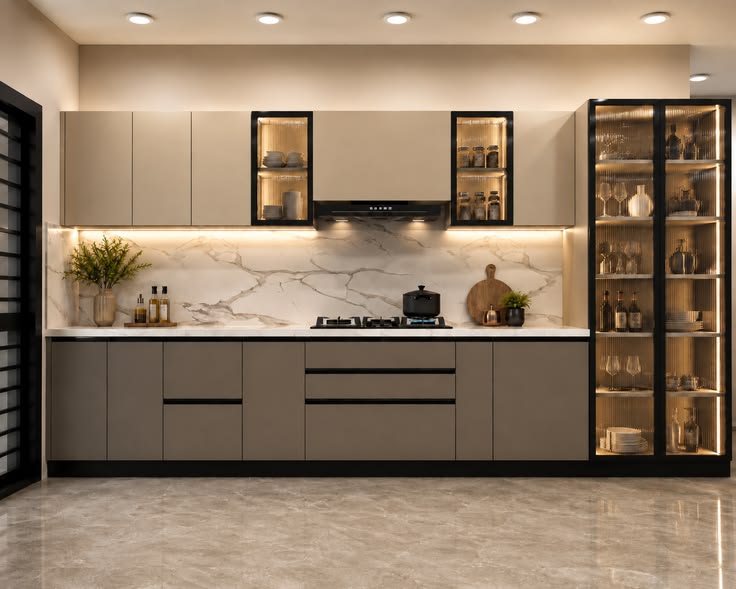
The Core Principles of Modular Kitchen Architecture
Modular kitchens differ from traditional mason-built or carpentered kitchens primarily in their precision, engineering, and standardized sizing. Understanding these foundational principles is essential before selecting materials or planning specific cabinetry layouts.
The Concept of Modular Components
In a modular setup, the entire kitchen is broken down into individual modules or boxes. These are manufactured off-site in highly controlled factory environments to guarantee precise dimensions, square corners, and immaculate edge-banding. Standard modules include:
- Base Cabinets: Resting on adjustable legs concealed by a toe-kick, these units form the workspace foundation and support the heavy stone countertops.
- Wall Cabinets: Mounted directly to the wall structure, these overhead storage spaces are designed to keep everyday spices, cups, and dry goods within arm's reach.
- Tall Units: These vertical giants span from the floor to the top of the wall cabinets, serving as a consolidated zone for built-in appliances and expansive dry pantries.
- Specialty Modules: Tailored units designed specifically for sinks, built-in dishwashers, under-counter ovens, or architectural corner configurations.
The Classic Working Triangle and Beyond
For decades, the standard benchmark for kitchen efficiency has been the working triangle—the invisible path connecting the sink, the stovetop, and the refrigerator. In modern smart kitchen planning, designers expand this concept into specialized workspace zones:
- The Consumables Zone: Comprising the refrigerator and food storage cabinets.
- The Non-Consumables Zone: Housing plates, bowls, utensils, and food storage containers.
- The Cleaning Zone: The sink, waste disposal unit, and built-in dishwasher.
- The Preparation Zone: The primary countertop area, complete with easy access to spices, knives, and mixing bowls.
- The Cooking Zone: Featuring the cooktop, wall oven, range hood, and heavy pots.
By organizing modules according to these exact zones, you minimize unnecessary steps and movement across the kitchen floor, optimizing the entire cooking workflow.
Optimizing Kitchen Cabinet Interiors for Unparalleled Efficiency
The true genius of a smart modular kitchen lies behind closed doors. The configuration of kitchen cabinet interiors dictates whether a kitchen is a joy to work in or a constant source of frustration. Utilizing high-end wirework, pull-out baskets, and engineered organizer systems maximizes every cubic inch of storage space.
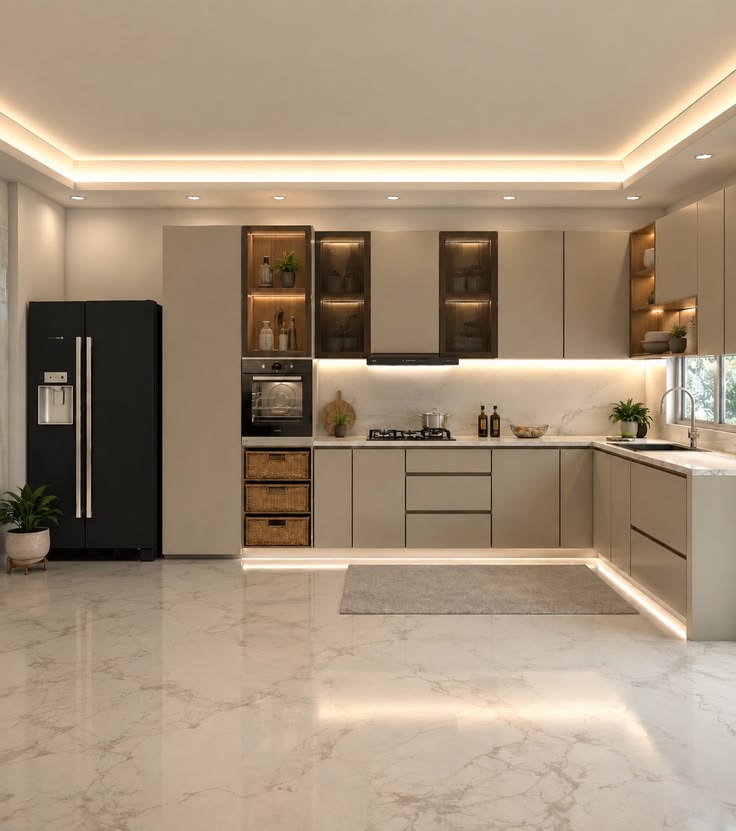
Advanced Drawer Systems vs. Static Shelves
Traditional lower cabinets with deep, static shelves are notorious for creating "lost zones" where items are forgotten at the back. Replacing these with full-extension drawer systems completely changes the storage dynamic. These systems roll out entirely, bringing the contents of the deep cabinet directly to your fingertips under optimal lighting.
Modern drawer systems utilize double-walled metal drawers (often referred to as tandem boxes) with built-in soft-close mechanisms. These slides can effortlessly support heavy cookware—some engineered to handle up to 70 kilograms of weight—without sagging or losing their smooth, gliding motion. Inner divider systems, customizable wooden pegs, and adjustable stainless steel cross-gallery rods allow you to secure plates, pots, lids, and pans in neat, rattle-free configurations.
Conquering Corner Spaces with Mechanical Ingenuity
Blind corners are historically the most underutilized areas of any kitchen layout. Standard L-shaped or U-shaped kitchens can easily lose valuable storage volume in these hard-to-reach intersections. Smart modular kitchen design overcomes this challenge with mechanical hardware solutions:
- The LeMans Pull-Out: Named after the famous racetrack due to its elegant curves, this mechanism features non-slip shelves that glide independently out of the cabinet. The fluid, sweeping movement pulls the entire shelf unit fully clear of the cabinet opening, offering unhindered overhead access to pots and heavy casseroles.
- The Magic Corner: A mechanized frame system that works on a track. When the cabinet door is pulled open, the front baskets pull out and slide to the side, automatically drawing the rear baskets forward into the accessible front zone.
- The Lazy Susan / Carousel: Ideal for diagonal or L-shaped corner cabinets, these rotating shelves turn 270 or 360 degrees on a central metal spindle, allowing you to quickly spin stored dry ingredients or small appliances into view.
The Modern Pantry: Tall Larder Units
The traditional walk-in pantry is increasingly being replaced by highly compact, super-efficient tall larder units integrated directly into the cabinetry run. A pull-out larder system uses a heavy-duty slide mounted to the floor and ceiling of the tall cabinet. When you pull the handle, the entire storage frame glides out, exposing multiple tiers of baskets accessible from both the left and right sides.
Alternatively, the tandem pantry features a split-level design. Shelves are mounted both inside the deep cabinet and on the inner panel of the door itself. When the door swings open, the rear shelves are pulled forward on a clever linkage mechanism, presenting all dry ingredients simultaneously in an organized display.
High-Tech Innovations: When Cabinetry Meets Technology
To transition from a standard modular layout to a truly "smart" kitchen, technology must be integrated seamlessly into the physical woodwork. Rather than focusing on superficial gadgets, a smart kitchen incorporates innovations that enhance structural functionality, accessibility, and ease of use.
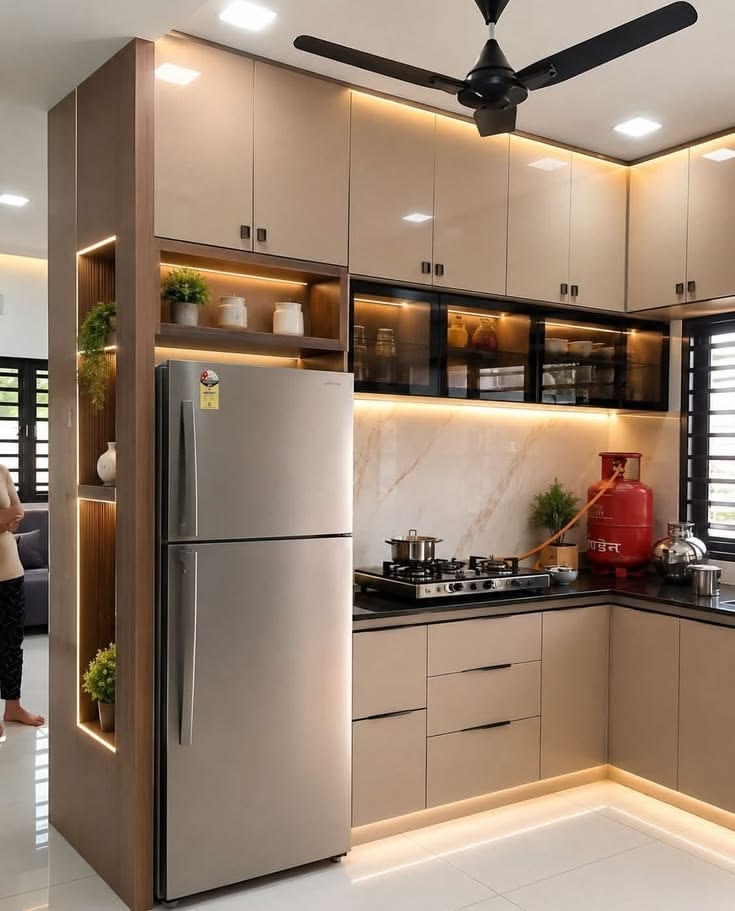
Motorized Touch-to-Open Cabinetry
For a sleek, minimalist aesthetic, handleless cabinets are highly sought after. However, pulling open heavy refrigerator panels or deep pan drawers without handles can be ergonomically challenging. Motorized opening support systems solve this issue effortlessly.
With a gentle tap of the hand, elbow, or hip against the door or drawer facade, a small electronic plunger at the rear of the cabinet activates, pushing the drawer or lift-up wall cabinet open smoothly. This is particularly valuable for under-sink pull-outs containing waste bins—allowing you to open the bin effortlessly even when your hands are full of organic waste.
Bi-Fold Lift Systems for Wall Cabinets
Traditional swing-out doors on wall cabinets pose a persistent head-collision hazard when left open during a busy cooking session. Smart modular design favors bi-fold lift systems. These mechanisms lift cabinet doors up and completely out of the user's workspace.
These lift systems feature variable-stop capabilities, meaning the door will stay open in any position you release it, keeping the handle within comfortable reach. Integrated soft-close dampers ensure the heavy glass or wooden doors descend silently and securely back into place with a gentle downward pull.
Intelligent Cabinet Lighting Systems
Proper lighting is vital for safety, food preparation precision, and general ambiance. Smart modular kitchens move away from harsh central ceiling lights, focusing instead on task-specific, integrated cabinet lighting:
- Recessed LED Profile Channels: Milled directly into the underside of wall cabinets, these aluminum profiles house high-CRI (Color Rendering Index) LED strips that throw uniform, shadow-free light directly onto the prep counter.
- Interior Drawer Sensors: Micro-switches or proximity sensors activate subtle, low-voltage LED lights the moment a drawer is pulled open, illuminating deep dark corners and making it easy to locate utensils at night.
- Adjustable Color Temperature: Smart control systems allow users to adjust the cabinet lighting color temperature, shifting from a crisp, cool daylight setting for detailed chopping tasks to a warm, soft glow for evening dining and entertaining.
Selecting Materials and Finishes Built to Last
A smart modular kitchen represents a significant investment, making durability and ease of maintenance primary considerations. Because the kitchen is a high-moisture, high-temperature environment prone to spills, selecting the right core materials and external finishes is paramount to preventing warping, swelling, and surface degradation.
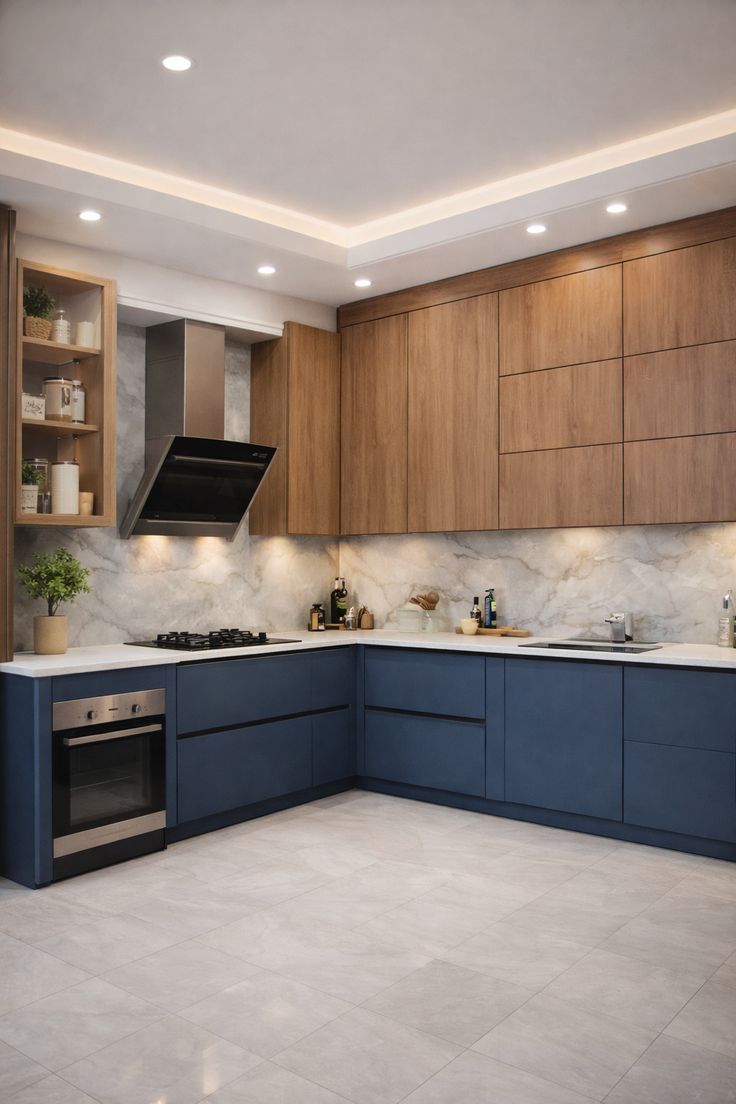
Analyzing Carcass Core Materials
The carcass is the inner box structure of the cabinet, hidden from view but carrying all the weight. Using substandard materials here will cause hinges to sag and cabinets to deform over time.
| Carcass Material | Structural Characteristics | Best Suited For |
|---|---|---|
| BWP Marine Plywood | Boiling Water Proof; bonded with synthetic phenol-formaldehyde resins to resist extreme moisture and fungal attacks without delaminating. | Under-sink modules, sink areas, and wet zone base cabinets. |
| HDHMR (High-Density High-Moisture Resistant) Board | Engineered from compressed wood fibers and specialized water-resistant resins, offering superb density, screw-holding capacity, and a perfectly smooth flat surface. | Dry zone base cabinets, wall cabinets, and tall pantry units. |
| MDF (Medium Density Fiberboard) | Uniform density with no natural knots; exceptionally easy to cut, shape, and rout for decorative profile doors. | Wall cabinet shutters and decorative cabinet facades. |
| Stainless Steel (SS 304 Grade) | Impervious to water, highly hygienic, rust-proof, and completely fireproof; does not emit volatile organic compounds. | Commercial-grade home kitchens and specialized outdoor kitchen modules. |
Premium Shutter Finishes: Balancing Aesthetics and Durability
The shutter finishes define the visual personality of your kitchen. High-quality smart kitchens leverage modern polymer technology and natural materials to deliver striking visual appeal paired with long-term wear resistance.
Acrylic Finishes
If you desire a contemporary high-gloss aesthetic, premium acrylic sheets are the industry standard. These synthetic polymer sheets are laminated onto a wood-based core. They offer a mirror-like reflective finish that does not fade or discolor over time. High-quality acrylics are scratch-resistant and highly resilient against steam and moisture exposure, making them very easy to clean with a soft microfiber cloth.
PU Paint (Polyurethane)
For a completely seamless, high-end look, polyurethane paint is sprayed onto the shutters in multiple layers within dust-free booths. Because the paint coats the entire surface, including the edges, there are no visible seams or edge-bands to catch grease or moisture. PU paint is available in a vast color spectrum and can be finished in high-gloss, satin, or velvet-matte textures.
Anti-Fingerprint Thermal Laminates
Deep matte surfaces are highly trendy but notoriously prone to displaying greasy fingerprints. Modern chemical engineering has introduced smart thermal laminates. These surfaces utilize nanotechnology to disperse light reflections, rendering fingerprints and light scratches virtually invisible. The surface is smooth to the touch, highly hygienic, and boasts thermal healing properties, allowing light micro-scratches to be repaired simply with a damp cloth and an ordinary household iron.
Step-by-Step Guide to Designing Your Smart Modular Kitchen
Executing a successful smart modular kitchen project requires methodical planning and precise execution. From initial measurements to the final installation of motorized systems, each phase must be coordinated with extreme care.
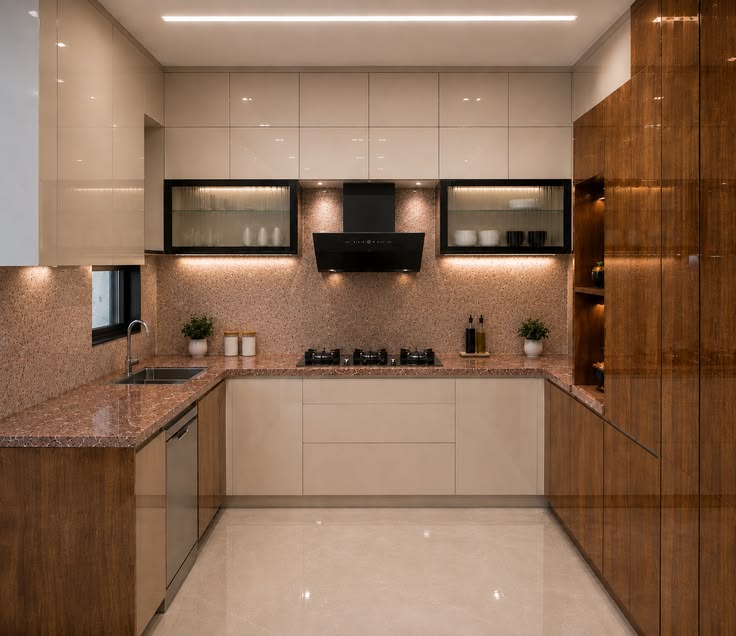
Phase 1: Accurate Site Surveys and Mechanical Mapping
Before designing a single cabinet module, the physical space must be measured to the millimeter. This process includes assessing the plumb of the walls (checking if they are perfectly vertical) and the level of the subfloor. Crucially, all existing mechanical, electrical, and plumbing (MEP) points must be documented:
- Identify the exact position of the water inlet and waste drain pipes.
- Locate gas cylinder lines or gas pipeline inlets.
- Map out ventilation exhaust ducts for the range hood chimney.
- Identify electrical wall sockets, taking note of amperage ratings for heavy-load appliances like ovens and dishwashers.
Phase 2: Selecting and Customizing Layout Configurations
The physical space constraints of your room will generally dictate the most efficient layout. The primary configurations include:
- The L-Shaped Layout: Ideal for smaller homes, utilizing two adjacent walls to create a classic, open working triangle with ample counter space.
- The U-Shaped Layout: Best suited for spacious, dedicated kitchen rooms, providing three full walls of cabinetry to maximize storage and preparation zones.
- The Island Layout: Features a freestanding central module that can house a secondary preparation sink, an induction cooktop, or double as an informal dining table.
- The Parallel (Galley) Layout: Often preferred by professional chefs, this design places two parallel runs of cabinetry opposite each other, creating a highly efficient workspace with incredibly short transit times between zones.
Phase 3: Finalizing Cabinetry Interior Access and Hardware Specs
This is where you match specific storage solutions with your household cooking habits. If you bake frequently, designate a tall unit for a built-in oven at eye level, paired with heavy-duty pull-outs nearby for heavy stand mixers. If you enjoy gourmet cooking, prioritize dynamic spice pull-outs, dedicated oil bottle organizers, and deep pot drawers directly beneath the primary cooktop.
Professional Installation and Maintenance: Safeguarding Your Investment
Even the finest materials and most advanced hardware will fail to perform if installed poorly. Precise alignment is the secret to smooth-gliding drawers and silent, soft-closing doors.
The Advantages of Professional Assembly
Factory-built modular cabinets rely on cam-and-dowel assembly systems, which provide far greater structural stability than basic screws driven directly into raw plywood edges. Professional installation teams use precise laser levels to align the cabinet legs before mounting the stone countertops, ensuring there is zero uneven weight distribution that could stress the cabinet joints or crack the stone surface over time.
Essential Maintenance Guidelines for Longevity
To preserve the beautiful finish and structural integrity of your smart modular kitchen, follow these maintenance best practices:
- Moisture Management: Never allow water to pool at the base of your cabinets. Periodically inspect the area beneath the sink module for minor leaks. Use protective aluminum or rubber drip trays to protect the bottom shelf.
- Gentle Cleaning Routines: Avoid using abrasive scouring pads, steel wool, or harsh chemical cleaners containing bleach or acetone on your cabinet shutters. Stick to mild dish soap diluted in warm water, wiping surfaces down with a clean, damp microfiber cloth.
- Hardware Care: High-end drawer runners and lift hinges are pre-lubricated with specialized grease. Never apply household oils (like WD-40 or cooking oil) to the slides, as this will attract dust and grit, eventually grinding down the delicate ball-bearing systems.
- Gentle Operation: While modern hardware is exceptionally durable, slamming drawers shut or forcefully pulling down motorized lifters can throw the delicate electronic sensors and soft-close pistons out of alignment. Let the integrated mechanisms do the work for you.
Elite Cabinetry
Address: 7 Castlemore Mews, Ballajura WA 6066, Australia
Hotline: 0061416988655
Phone: 0061416988655
Email: sales@elitecabinetry.com.au
Website: https://elitecabinetry.com.au/