
Free Shipping & Free Return

When planning a kitchen renovation, the layout of your kitchen cabinet interiors determines how efficiently your household operates daily. Among the essential choices you will make, selecting the right Hinged Door Cabinet layout remains one of the most critical decisions for both function and visual appeal. While modern design introduces various sliding mechanisms and lift-up systems, the classic hinged door remains a cornerstone of residential cabinetry, offering unmatched durability, cost-effectiveness, and design flexibility.
For generations, the standard kitchen cabinet has relied on hinged doors to conceal storage and protect kitchenware from dust and grease. Historically, these systems utilized external butt hinges mounted directly onto face frames. While functional, these older designs offered limited adjustability and left the mechanical parts exposed to the humid kitchen environment.
Today, the integration of European-style concealed hinges has completely transformed how a kitchen cabinet behaves. Modern systems shut silently, open to wider angles, and integrate seamlessly with minimal visual clutter. Choosing a hinged setup over modern sliding or bi-fold alternatives is not just a nod to traditional style; it is a practical choice backed by decades of engineering refinements.
Furthermore, these cabinets form the backbone of both traditional and ultra-modern kitchen aesthetics. Whether you prefer a rustic farmhouse look with shaker doors or a sleek, handle-less minimalist finish, the mechanical simplicity of a hinged door ensures your kitchen remains operational for decades without requiring frequent mechanical interventions.
To appreciate the structural integrity of high-quality cabinetry, one must understand the individual components that make up the system. Every cabinet is a combination of engineered woodwork and precision hardware.
The carcass is the structural core of your kitchen cabinet. Premium manufacturers construct the box using 16mm or 18mm moisture-resistant melamine-faced particleboard (HMR) or high-grade plywood. Plywood provides exceptional screw-holding capacity, which is vital for supporting heavy hinged doors over time. HMR, on the other hand, provides a smooth, easy-to-clean surface resistant to steam and occasional spills.
The door panel is the visible face of your cabinet. Depending on your design preference, this can range from solid timber to Medium-Density Fibreboard (MDF) finished with polyurethane paint, vacuum-formed thermo-foil, or high-pressure laminate (HPL). MDF is highly stable and does not warp under temperature fluctuations, making it an ideal substrate for painted hinged doors.
The hinge is the mechanical muscle of the cabinet. Premium kitchen cabinet interiors utilize concealed hinges, often referred to as cup hinges or European hinges. These are drilled into the back of the door panel and clip onto mounting plates fixed inside the cabinet box. Modern hinges feature built-in liquid dampeners to provide soft-closing actions, preventing doors from slamming shut.
The performance of your hinged door cabinet relies heavily on the type of hinge hardware selected. Cheap, unbranded hinges quickly lose tension, leading to sagging doors and misaligned lines. Investing in commercial-grade hardware ensures long-term performance.
European hinges are the standard in modern kitchen design. They are completely hidden when the cabinet door is closed, maintaining clean, uninterrupted lines. These hinges offer three-way adjustability (up/down, left/right, in/out), allowing installers to align doors perfectly even if the kitchen walls are slightly out of plumb.
Hinges come with different opening capacities to suit specific kitchen layouts:
Beyond standard movements, specialized hardware caters to unique kitchen requirements. Inset hinges are used when the cabinet door is designed to sit completely flush within the cabinet frame, rather than overlaying it. Self-closing hinges pull the door shut when it reaches a certain angle, while push-to-open mechanisms eliminate the need for handles entirely, utilizing a spring-loaded plunger to release the door with a gentle press.
Selecting the right material for your cabinet doors balance aesthetic desires with practical durability requirements. Kitchen environments are demanding, experiencing high humidity, heat exposure, and frequent physical impacts.
Solid timber offers natural warmth, unique grain patterns, and timeless luxury. However, wood naturally expands and contracts with changes in humidity. For hinged door configurations, timber must be dried and sealed properly to prevent warping, which can throw the doors out of alignment.
MDF is the preferred substrate for painted kitchens. It offers a perfectly smooth surface free of knots or grain patterns, allowing for a flawless lacquer finish. Polyurethane paint is applied in multiple coats, creating a hard-wearing, moisture-impermeable barrier that is easy to clean and highly resistant to yellowing.
For high-traffic family kitchens, laminate and melamine finishes offer incredible scratch resistance. Modern manufacturing techniques allow for textured laminates that mimic the feel of natural wood grain or industrial concrete. These doors are highly durable, cost-effective, and require minimal maintenance over their lifespan.
A beautiful cabinet exterior means very little if the interior storage is chaotic and hard to access. The beauty of a hinged door cabinet lies in its versatility; it can conceal a wide range of smart storage solutions designed to maximize every cubic centimeter of space.
The simplest and most common interior configuration is adjustable shelving. Using a series of pre-drilled holes (the standard 32mm system), homeowners can reposition shelves to accommodate tall blenders, short cereal boxes, or stacks of dinner plates. To prevent shelves from bowing under heavy cookware, ensure they are made from 16mm or 18mm high-density board and supported by metal shelf pins rather than plastic ones.
One drawback of traditional deep base cabinets is that items stored at the very back become lost or hard to reach. By installing internal pull-out drawers behind a single hinged door, you get the clean, uniform look of a cupboard on the outside with the ergonomic access of a drawer system on the inside. When the door is opened, the drawers glide out smoothly, bringing pots, pans, and pantry staples directly into view.
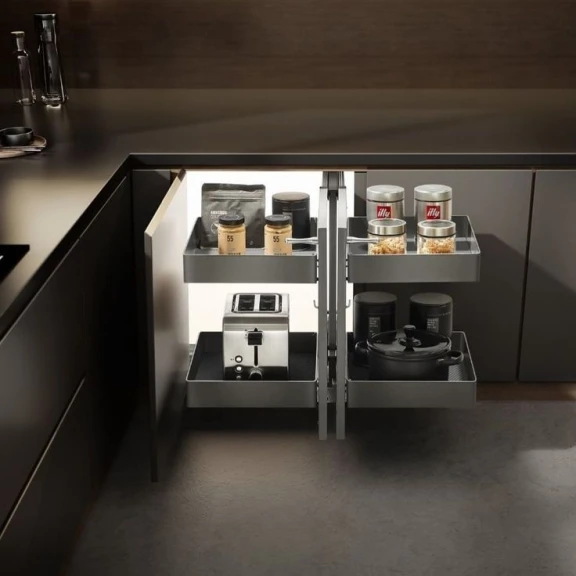
Kitchen corners are notorious for wasting space. Traditional deep corner cupboards often turn into "dead zones." Integrating smart hardware behind a hinged corner door solves this problem:
Do not overlook the valuable space on the back of the cabinet door itself. For shallow pantries or spice cabinets, mounting slim wire racks or custom timber shelves to the inside of a hinged door keeps frequently used items, like spices, oils, or cleaning supplies, instantly accessible without cluttering main shelves.
When designing kitchen cabinet interiors, it is helpful to compare the classic hinged door against other popular modern opening styles to make an informed decision based on your specific kitchen layout.
| Mechanism Type | Key Advantages | Primary Disadvantages | Best Suited For |
|---|---|---|---|
| Hinged Doors | Cost-effective, easy to adjust, highly durable, classic aesthetic, opens fully for complete access. | Requires clear clearance space in front of the cabinet to open; can block walkways when left open. | Base units, tall pantries, wall cabinets in spacious kitchens. |
| Sliding Doors | Does not protrude into the room, ideal for tight walkways, sleek modern look. | Only opens half the cabinet at any time; hardware can accumulate dirt and glide poorly. | Narrow kitchens, small apartments, shallow utility cabinets. |
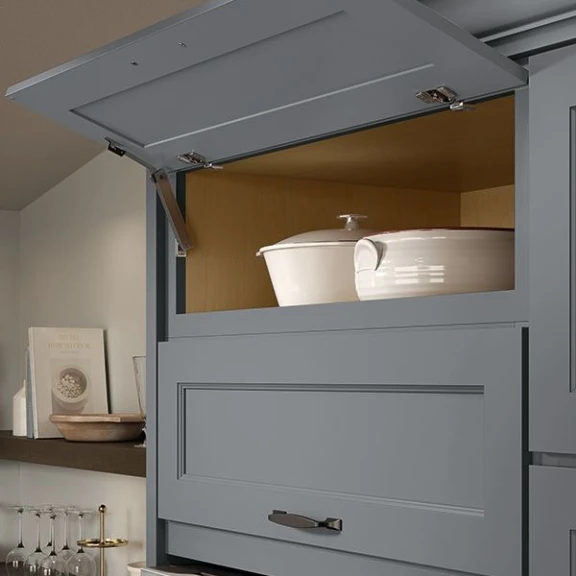
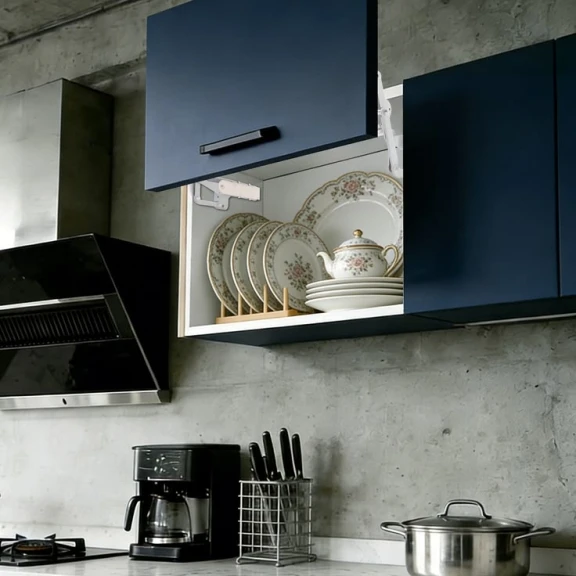
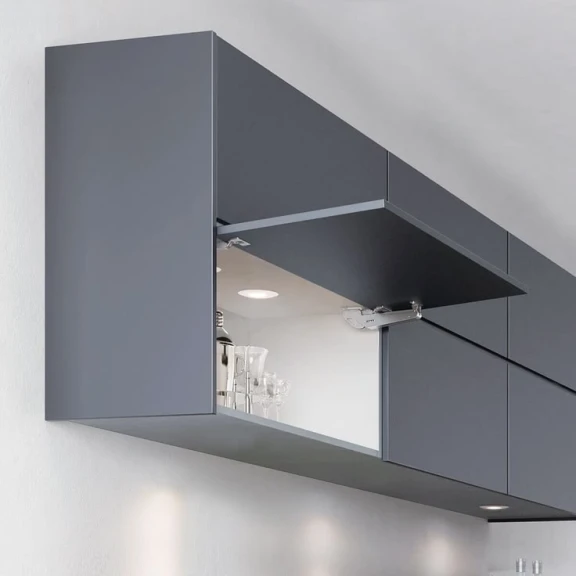
| Bi-fold Lift-up Systems | Folds up and away, completely out of the way of the user; highly ergonomic. | Very expensive hardware; complex installation; difficult to close for shorter individuals. | Upper wall cabinets, appliance garages. |
Beyond structural choices, how your hinged doors look defines the entire character of your home. Your choice of door profiles, colors, and hardware can shift a design from classic heritage to cutting-edge contemporary.
The Shaker style door features a recessed center panel with a clean four-piece frame. It is the chameleon of kitchen design, fitting perfectly into Hampton-style homes, traditional farmhouses, and transitional spaces. On the other hand, Flat Panel (Slab) doors are completely flat, offering a seamless, monolithic look that is ideal for modern, industrial, or Scandinavian-inspired interiors.
The handles you choose serve as the "jewelry" of your kitchen cabinets. For a traditional look, antique brass cup pulls and classic round knobs work beautifully on shaker doors. For a streamlined, contemporary aesthetic, consider slim matte black finger pulls, edge-pulls mounted to the top of the door, or push-to-open touch latches that remove hardware entirely from the exterior surface.
To break up long runs of solid timber or painted cabinetry, consider incorporating glass-fronted hinged doors on select wall cabinets. Clear glass displays fine glassware and china, while frosted or ribbed glass offers a subtle view of interior items while concealing everyday clutter. Adding warm LED strip lighting inside these glass cabinets creates beautiful ambient lighting for evening entertaining.
For a kitchen cabinet installation to stand the test of time, precise planning, measuring, and installation are required. Even small errors during the initial layout phase can lead to doors that do not close properly or rub against neighboring units.
When designing your layout, adhering to standard industry dimensions ensures compatibility with appliances and internal wireware storage systems:
Over time, through heavy use or natural settling of the house frame, cabinet doors may shift slightly. Fortunately, European concealed hinges are designed with integrated adjustment screws that allow you to realign them using a simple Phillips head screwdriver.
While high-quality hinged cabinets are incredibly durable, the kitchen environment is harsh. Implementing a simple, regular maintenance routine will preserve both the appearance and physical integrity of your cabinetry for decades.
Avoid abrasive scrubbers, steel wool, or harsh chemical cleaners containing ammonia or bleach, as these can strip protective topcoats or scratch laminate surfaces. Instead, use a soft microfiber cloth dampened with warm, soapy water. Always dry the surfaces immediately with a clean, dry cloth to prevent moisture from seeping into door joints, particularly around the edges of laminated doors where moisture can cause swelling.
Every six to twelve months, check the structural screws holding the hinge plates to the cabinet walls. Daily opening and closing can cause these screws to back out slightly over time. Gently tighten them using a hand screwdriver (avoid power drills, which can strip the wood threads). If the hinges begin to squeak, apply a single drop of dry silicone-based lubricant to the moving joints, wiping away any excess immediately.
While flat-pack, off-the-shelf cabinets may seem appealing for tight budgets, they often limit your layout options and fail to make the best use of unique spatial quirks. Working with professional cabinet makers allows you to design custom solutions tailored to your specific storage habits and physical lifestyle.
An expert designer understands how to balance the workflow of your kitchen, placing high-use items within comfortable reach and configuring cabinet interiors to eliminate awkward bends and reaches. From selecting the perfect timber veneer to sourcing commercial-grade, lifetime-warrantied hinge hardware, professional guidance ensures your kitchen investment pays off in daily ease of use and long-term property value.
When you are ready to transform your kitchen space, partnering with a trusted local manufacturer who understands premium joinery makes all the difference. High-end custom work ensures that every hinged cabinet, drawer runner, and pantry pull-out is manufactured to millimeter-perfect tolerances, resulting in a cohesive, functional, and visually striking kitchen that serves as the true heart of your home.
Elite Cabinetry
Address: 7 Castlemore Mews, Ballajura WA 6066, Australia
Hotline: 0061416988655
Phone: 0061416988655
Email: sales@elitecabinetry.com.au
Website: https://elitecabinetry.com.au/