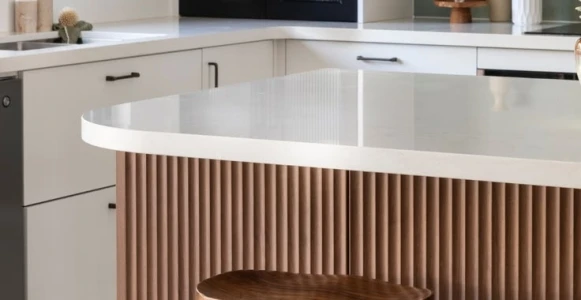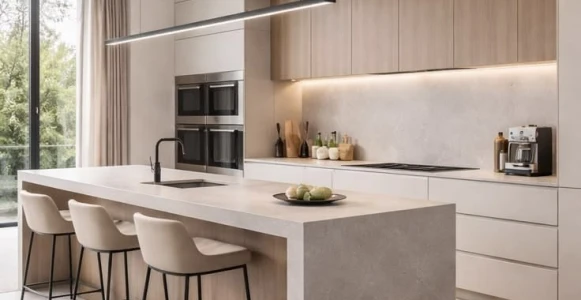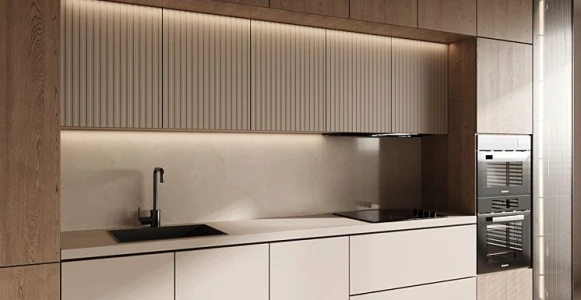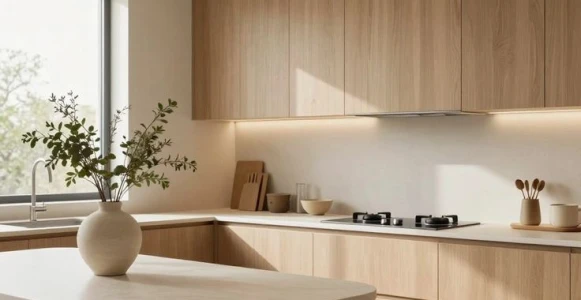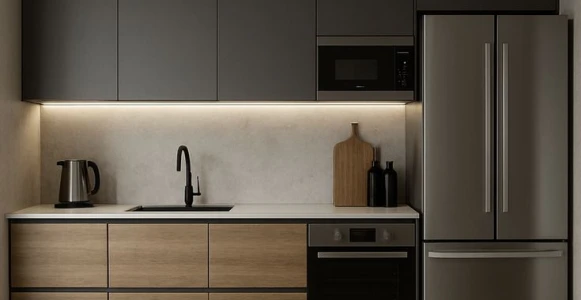
Minimalist Modern Kitchen, designing a flawless minimalist modern kitchen requires a delicate balance of aesthetic restraint and high-performance engineering. At the center of this design movement are Kitchen cabinets, which serve as both the structural foundation and the visual canvas of the room. Rather than simply stripping away detail, modern minimalism focuses on maximizing utility, refining proportions, and selecting premium materials that stand the test of time. A successful design hides the complexity of daily culinary activities behind clean, calm surfaces, creating a space that feels effortless to use and beautiful to inhabit.
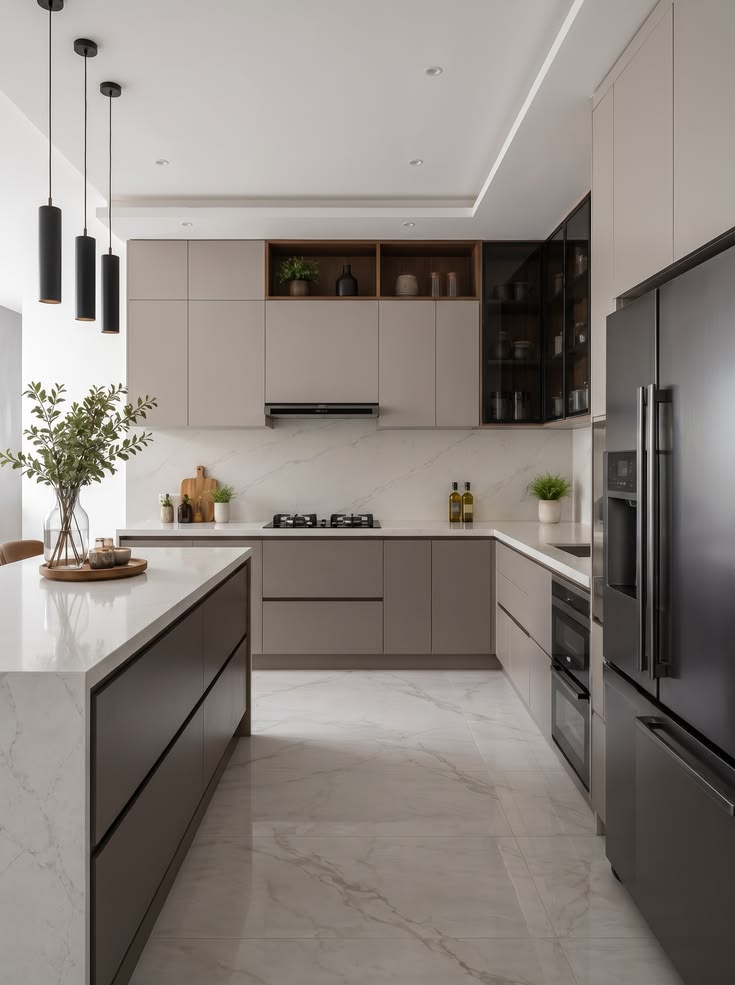
The Philosophy of Minimalism in Modern Kitchen Design
Minimalism in interior design is often misunderstood as merely leaving spaces empty or choosing white finishes. In a high-end kitchen, true minimalism is an exercise in intentionality. Every line, gap, and material must serve a clear purpose, as there are no ornate moldings or decorative details to distract from installation flaws or poor craftsmanship.
This design philosophy draws heavily from mid-century modernist architecture and Japanese-Scandinavian (Japandi) design principles. It prioritizes light, spatial flow, and structural honesty. In the kitchen, this translates to smooth, unadorned surfaces that reflect light and make the room feel larger and more cohesive.
By shifting the focus from surface decoration to structural quality, homeowners can create a kitchen that feels peaceful rather than chaotic. The goal is to eliminate visual noise—the cluttered countertops, mismatched small appliances, and awkward corners—and replace them with a unified system of cabinetry that integrates seamlessly with the surrounding architecture.
Core Visual Elements of a Minimalist Kitchen
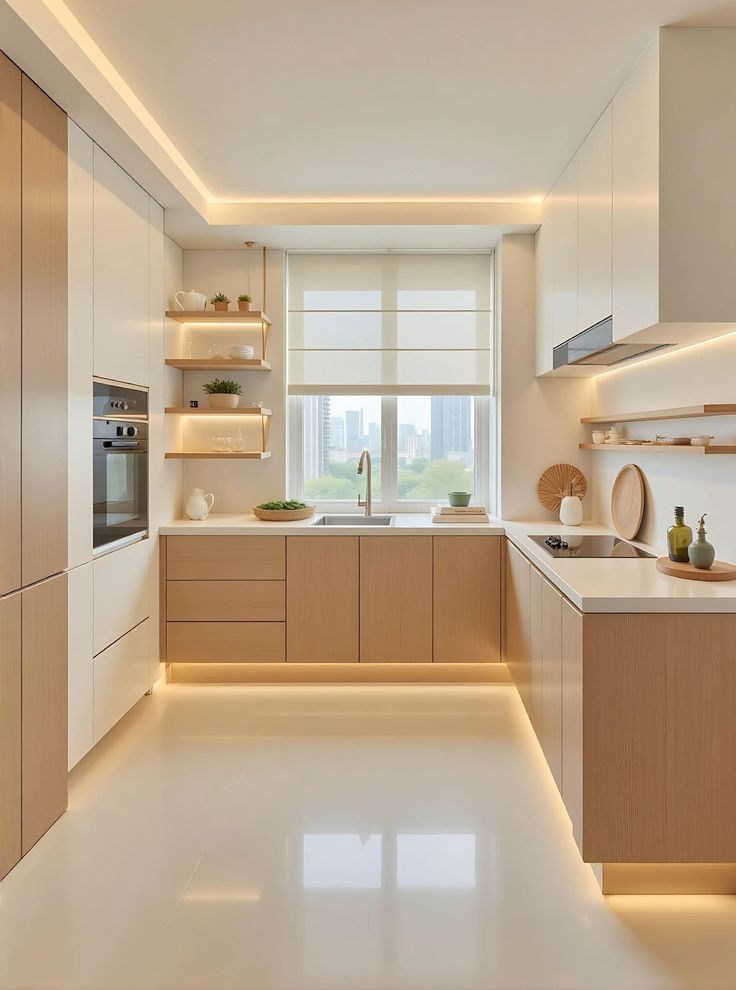
To achieve a clean, modern aesthetic, several key visual elements must work in perfect harmony. These design choices form the foundation of a space that feels balanced, open, and sophisticated.
- Symmetry and Clean Sightlines: Modern layouts emphasize long, unbroken horizontal and vertical lines. Upper cabinets often align perfectly with the height of tall pantry units, and drawer banks are sized consistently to maintain a clean grid pattern across the wall.
- Monochromatic and Muted Palettes: Minimalist spaces lean toward cohesive color schemes. This doesn't mean the kitchen must be entirely white; matte grays, deep charcoals, soft beiges, and even rich, dark forest greens or blacks are highly effective when applied consistently across all surfaces.
- Integrated Appliances: To maintain clean lines, standard appliances are concealed behind custom cabinet panels. Fully integrated refrigerators, dishwashers, and range hoods disappear into the cabinetry, leaving only the cooktop and built-in ovens exposed.
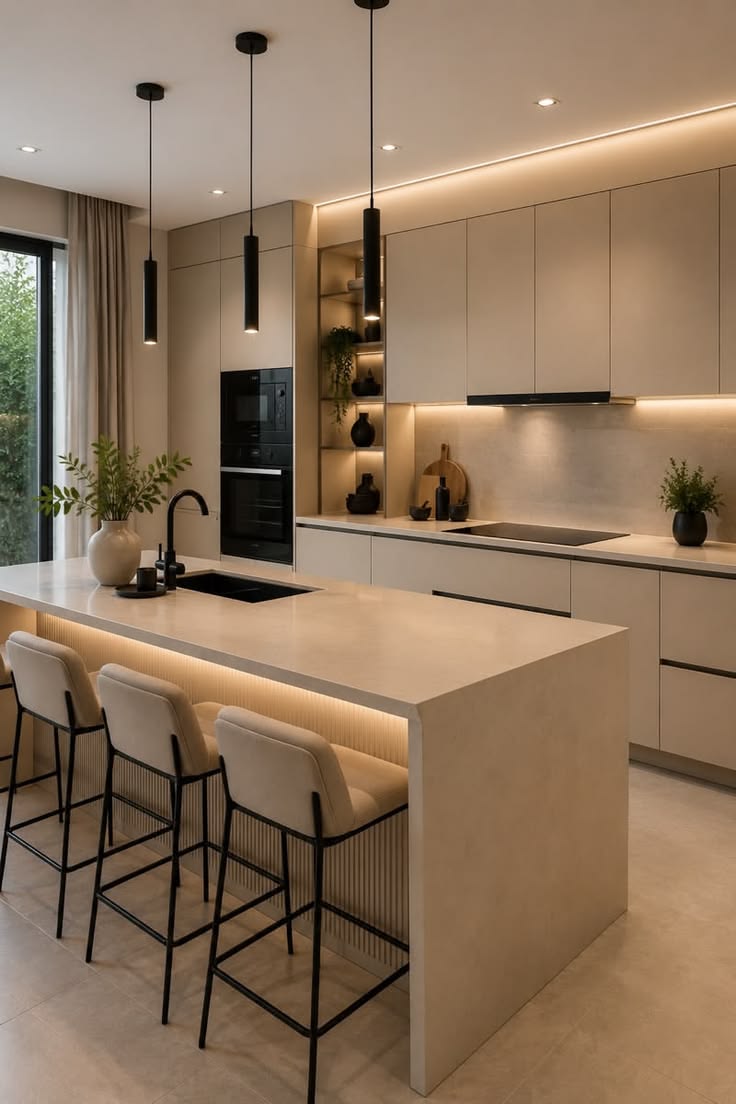
- Elimination of Visible Knobs and Handles: Traditional pulls are replaced with handleless opening mechanisms, integrated finger pulls, or subtle recessed channels, ensuring nothing protrudes from the flat surface of the cabinet doors.
The Structural Foundation: Frameless Cabinet Construction
The clean lines of a modern kitchen are made possible by frameless cabinet construction, also known as European-style cabinetry. Traditional American cabinets utilize a face frame, which creates a visible border around each door and drawer front, leaving wider gaps and reducing interior storage space.
Frameless cabinets eliminate this front frame entirely. The cabinet doors and drawer fronts attach directly to the sides of the cabinet box, leaving minimal gaps of just two to three millimeters between panels. This allows for a continuous, sleek facade where the cabinet doors cover the entire face of the cabinet box.
Beyond the clean aesthetic, frameless construction offers significant functional benefits. Without a face frame obstructing the openings, drawers can be wider, and pull-out storage accessories can slide out without losing valuable inches on either side. This maximises the usable interior volume of every cabinet unit.
Advanced Handleless Cabinet Designs
The removal of traditional cabinet handles is one of the most defining characteristics of a minimalist modern kitchen. Designers utilize several innovative methods to ensure ease of use while maintaining completely flat, unobstructed door surfaces.
Gola Profile Systems
The Gola system is a recessed aluminum channel routed into the cabinet carcass rather than the door itself. This channel creates a discrete shadow line above drawers or behind tall cabinet doors, allowing you to easily slip your fingers behind the panel to pull it open. Gola profiles can be finished in matching cabinet colors, anodized aluminum, brass, or matte black to create a subtle architectural detail.
J-Pull Cabinets
J-pull doors feature a "J" shaped groove cut directly into the top or bottom edge of the cabinet door or drawer front. This integrated handle profile is part of the door itself, offering a sleek look without the need to install separate horizontal channels inside the cabinet carcass. It is a cost-effective and clean solution for modern kitchens.
Push-to-Open (Touch Latches)
For the ultimate flat facade, push-to-open mechanical or electronic systems are used. A simple tap with a hand, knee, or hip activates a spring-loaded latch or an electric motor, gently popping the door or drawer open. This is particularly useful for waste bins or under-sink pull-outs when your hands are full or messy from cooking.
Optimizing Kitchen Cabinet Interiors
The true success of a minimalist kitchen lies behind the closed doors. Because countertops must remain completely clear of clutter, the internal storage systems must be meticulously planned to accommodate every tool, appliance, and food item.
Deep Drawer Systems over Lower Shelves
Standard base cabinets with swing doors and static shelves are highly inefficient in a modern kitchen. They require you to bend down and reach deep into dark corners to retrieve items. Minimalist designs replace these doors with wide, deep drawer systems.
Drawers pull out completely, displaying all contents from a top-down view. Modern drawer runners can support weights up to 70 kilograms, allowing for the safe, smooth storage of heavy cast-iron pots, ceramic dishware, and dry food storage containers.
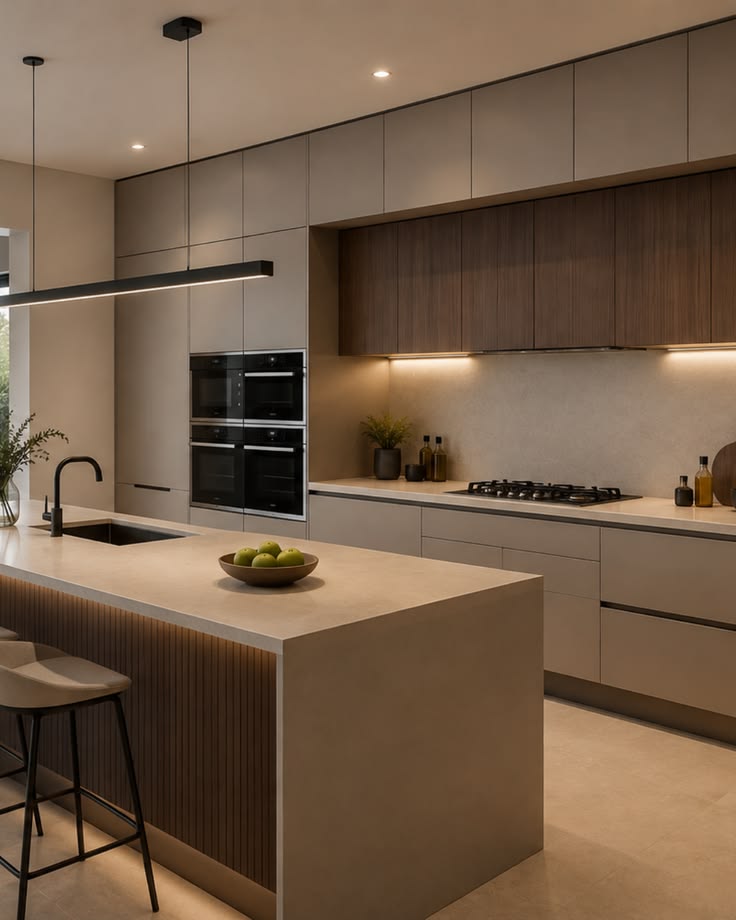
Internal Organization and Drawer Dividers
To prevent items from sliding around inside large drawers, custom internal organization systems are integrated directly into the cabinet design. High-end kitchens utilize modular dividing systems made from powder-coated steel, solid walnut, or oak.
- Adjustable Peg Systems: Placed inside deep drawers, these allow you to secure plates, bowls, and pots in neat stacks that do not shift when the drawer is opened or closed.
- Custom Cutlery and Utensil Trays: Precision-fit trays organize everything from chef's knives to small spices, keeping essential tools organized and out of sight.
- Dedicated Spice and Condiment Pull-outs: Located close to the cooking zone, these slim pull-out units keep oils, vinegars, and spices organized and easily accessible.
Appliance Garages
Small appliances like coffee makers, blenders, and toasters are notorious for cluttering kitchen counters. Minimalist kitchens solve this with custom appliance garages. These are deep cabinets resting directly on the countertop, equipped with lift-up pocket doors that slide back into the cabinet walls when open.
Inside, the cabinets are fitted with electrical outlets, allowing you to use your appliances without moving them. When you are finished, simply pull the cabinet door down, and the appliances disappear from view, restoring the kitchen’s clean aesthetic.
Blind Corner Solutions
Corner cabinets are often wasted spaces where items go to be forgotten. Rather than using basic lazy susans, modern cabinet interiors utilize sophisticated articulated pull-out trays, such as the LeMans or Magic Corner systems.
These systems feature kidney-shaped shelves that glide smoothly out of the cabinet when the door is opened, bringing all stored items out into the open air. This turns what was once a dark, inaccessible void into highly efficient storage for mixing bowls, small appliances, or pantry goods.
Premium Materials for Modern Cabinetry
Because minimalist design relies on large, flat planes of color and texture, the quality of the materials used is paramount. The surface finishes must not only look exceptional under natural and artificial light but also withstand the daily wear and tear of a busy household.
Polyurethane Matte Lacquer
For a flawless, seamless finish, polyurethane lacquer is applied to medium-density fiberboard (MDF) panels in multiple sprayed coats. This creates a durable, smooth surface with no visible edges or seams. Matte lacquers are highly favored in minimalist designs for their ability to absorb light, creating a soft, velvet-like appearance that adds warmth to the kitchen.
High-Pressure Laminates (HPL) and Nanotechnology Surfaces
Modern laminates have evolved significantly. Advanced nanotechnology materials, such as Fenix NTM, offer an ultra-matte surface that is highly resistant to fingerprints, scratches, and impact. These smart materials feature thermal healing properties, allowing micro-scratches to be repaired using a damp cloth and a household iron. They are ideal for high-traffic family kitchens where maintenance is a priority.
Vertical Grain Wood Veneers
To introduce natural warmth without cluttering the design, many modern kitchens feature natural wood veneers. Species such as rift-sawn white oak, walnut, or larch are sliced thin and applied to stable substrate cores. Designers use a technique called "sequence matching," where the natural wood grain flows continuously from one cabinet door to the next across the entire kitchen facade, resembling a single piece of fine furniture.
Acrylic and Metallic Finishes
For those seeking a high-gloss aesthetic, high-grade acrylic panels offer a mirror-like finish with exceptional depth of color. Alternatively, real metallic lacquers or thin metal veneers (such as brushed brass, copper, or anodized aluminum) can be used on select cabinet fronts or island back panels to introduce a striking architectural element that patinas beautifully over time.
Advanced Hardware: The Mechanics of Smooth Operation
The luxury feel of a modern minimalist kitchen is defined by how the cabinets move. High-quality hardware ensures that doors and drawers operate silently, smoothly, and reliably for decades.
Soft-Close Hinges and Runners
Standard hinges are replaced with heavy-duty, soft-close hinges that prevent doors from slamming. Similarly, drawer slides feature integrated fluid dampeners that slow the drawer down in its final inches of travel, pulling it shut silently and securely, regardless of how hard it was pushed.
Lift-Up Overhead Systems
Traditional swinging doors on overhead cabinets can be hazardous when left open and break the horizontal lines of a modern space. Minimalist kitchens utilize vertical lift-up systems, such as Blum Aventos. These mechanisms lift the cabinet door straight up, bi-folding or pivoting it above the head of the user, keeping the workspace open and safe while cooking.
Electronic Drive Assist Systems
For the ultimate in modern luxury, electric drive systems can be integrated into drawers and waste pull-outs. A light touch on the front of the cabinet activates a small electronic motor that pushes the drawer open smoothly. This hands-free operation is particularly practical for pull-out trash bins, allowing you to open the bin with a knee or elbow when your hands are full.
Integrating Functional Task and Ambient Lighting
Minimalist spaces require a highly considered lighting plan. Because the design minimizes decorative pendant lights and ornate fixtures, the lighting must be integrated directly into the cabinetry to highlight architectural lines and provide essential task lighting.
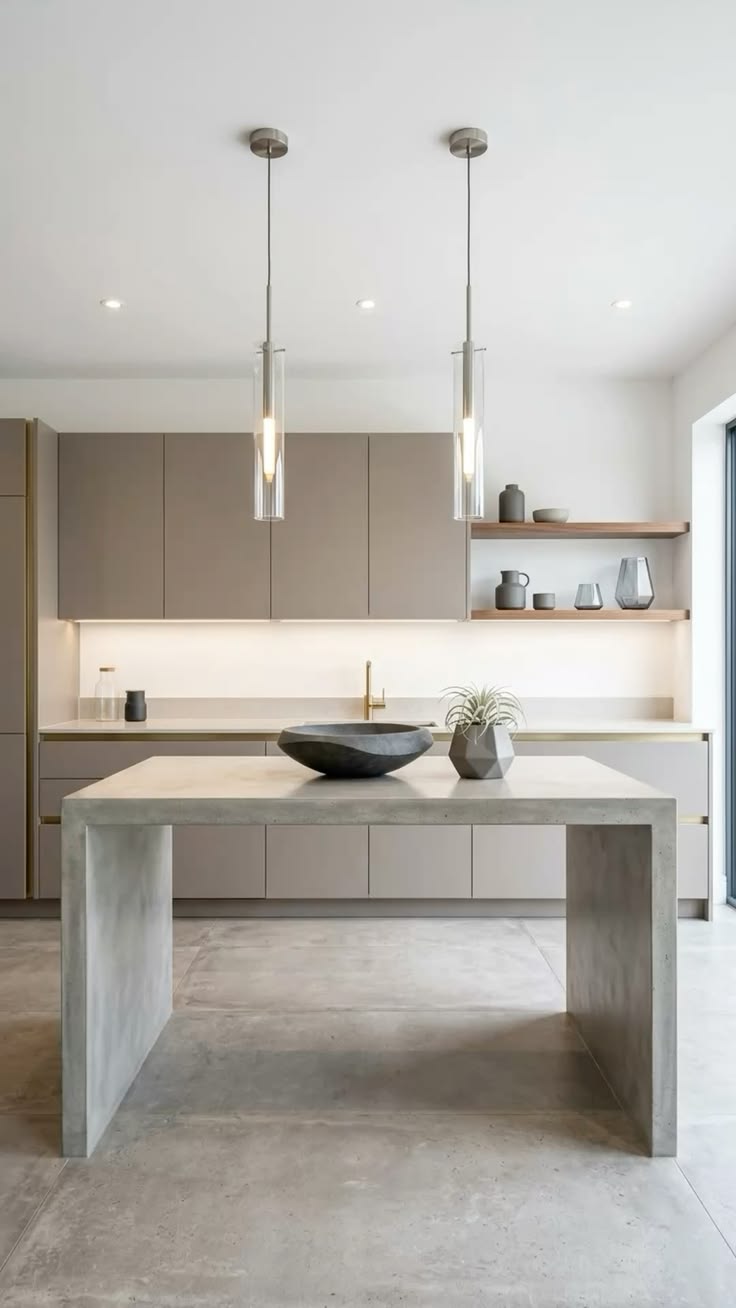
Under-Cabinet LED Strips
Continuous, high-CRI (Color Rendering Index) LED strip lights are recessed into the bottom panel of wall-mounted cabinets. These are positioned to cast a shadow-free, even glow across the worktops, ensuring safety and precision during food preparation.
In-Cabinet Motion-Activated Lighting
When dark cabinet doors or deep drawers are opened, integrated LED strip lights or spotlights turn on automatically via magnetic sensors. This illuminates the interior, making it easy to find stored items without needing to turn on bright overhead kitchen lights late at night.
Floating Plinth Lighting
LED strip lights installed along the recessed toe-kick (plinth) at the base of the cabinets create a subtle wash of light across the floor. This visually detaches the cabinetry from the floor, creating a stunning "floating" effect that makes heavy island benches and tall pantry walls feel light and spacious.
Choosing the Perfect Countertop and Backsplash
To maintain the seamless aesthetic of a minimalist kitchen, the countertops and backsplash should be treated as a single, cohesive unit. Rather than introducing multiple competing patterns, modern designs often utilize a monochromatic, monolithic approach.
Monolithic Slab Designs
Engineered quartz, porcelain sheets, and sintered stone materials (such as Dekton) are favored for their durability and clean look. By using a single, large slab that wraps around the island with mitered waterfall edges, the countertop appears as a solid block of stone anchored in the space.
Matching Countertop and Backsplash
Continuing the countertop material up the wall as a full-height backsplash creates a clean, unbroken transition. This eliminates the need for grout lines and contrasting tile patterns, keeping the visual field simple and easy to clean.
Planning and Executing Your Renovation
Achieving a high-end minimalist kitchen requires careful planning and collaboration with specialized cabinet designers. Because there are no decorative trims to hide gaps, the tolerances during installation are extremely tight.
First, conduct a thorough audit of your current kitchen. Count your plates, small appliances, and pantry goods to determine exactly how many drawers, pull-outs, and vertical organizers you need. This ensures that every item has a designated home, preventing clutter from returning to your new countertops.
Next, work with a professional kitchen designer who understands frameless construction and high-performance hardware. They will ensure that your plumbing, electrical, and structural walls are prepared with the precision required to support heavy, seamless cabinetry and integrated appliances.
Elite Cabinetry Contact Information
If you are ready to transform your home with a custom minimalist modern kitchen, contact the experts at Elite Cabinetry. We specialize in designing and manufacturing premium kitchen cabinet interiors tailored to your unique lifestyle.
Elite Cabinetry
Address: 7 Castlemore Mews, Ballajura WA 6066, Australia
Hotline: 0061416988655
Phone: 0061416988655
Email: sales@elitecabinetry.com.au
Website: https://elitecabinetry.com.au/